現代の日本人はどんな醤油を何にどう使ってる?
Written by Masa
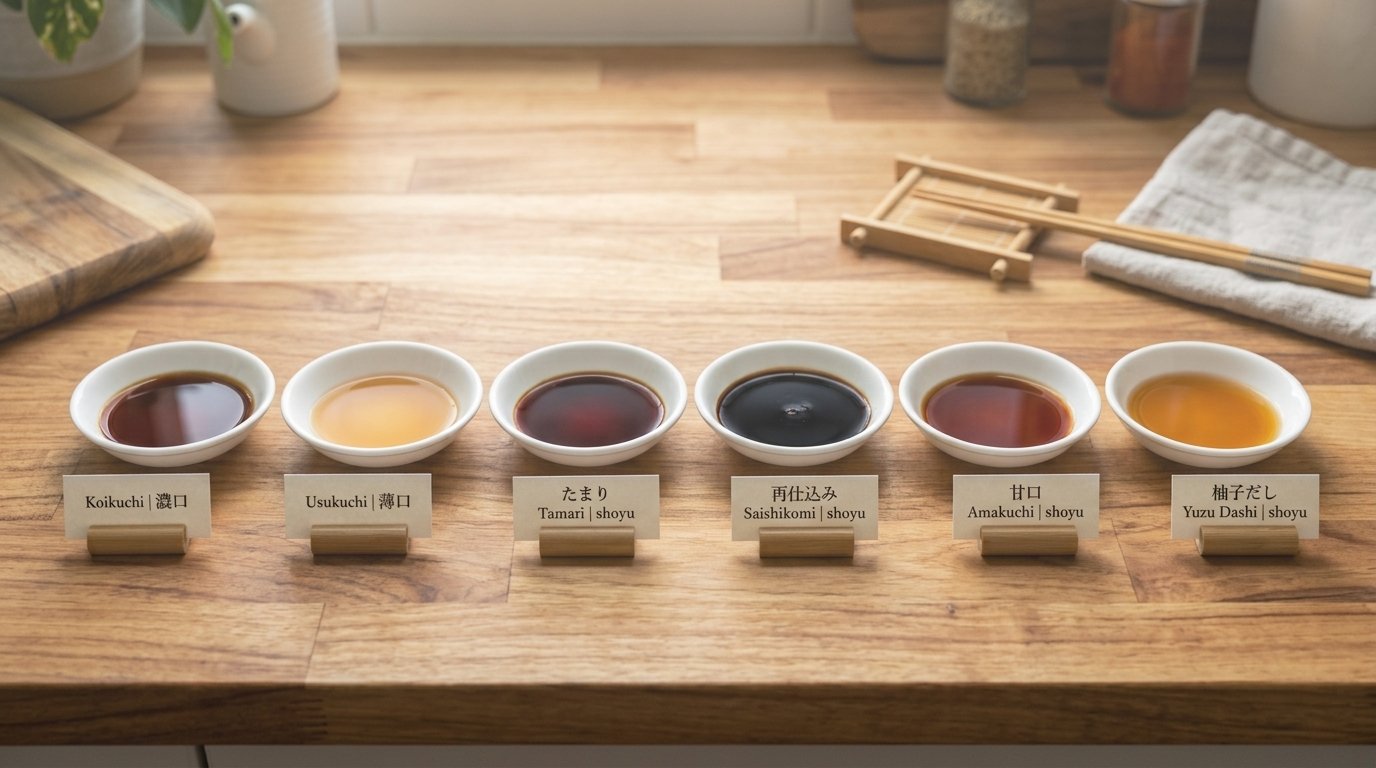
If you walk into a typical Western kitchen and open the fridge, you will likely find one lonely bottle of soy sauce. It is the designated workhorse, expected to perform every culinary duty from marinating chicken to drowning a bowl of white rice (a practice, by the way, that makes most Japanese gently weep).
In a modern Japanese household, the reality is slightly different. Soy sauce is not a monolithic, one-size-fits-all condiment. It is a bit like a toolbox.
To understand how Japanese people actually use soy sauce today, you have to separate the kitchen from the dining table.
The Kitchen Workhorse
Behind the scenes, soy sauce is treated as a foundational building block rather than a standalone flavor. When simmering root vegetables, making teriyaki, or preparing a broth, soy sauce is often poured from a large, economical, one-liter plastic jug. In this context, it rarely acts alone. It is almost always married to its best friends: sake, mirin, and sugar.
The goal in Japanese cooking is often kakushi-aji, or “hidden flavor.” The soy sauce is there to provide deep, savory umami and a rich color, but if a dish tastes overwhelmingly like soy sauce, the cook has failed. It is meant to elevate the inherent flavor of the daikon radish or the fish, not mask it.
The Table Top Performer
The dining table is where things get precise. Once the food is served, the large plastic jug stays in the kitchen. On the table, you will find a much smaller dispenser containing a fresher, often higher-quality soy sauce meant for direct application.
This is the soy sauce used for dipping sashimi and grilled fish, drizzling sparingly over a block of cold or warm tofu (hiyayakko / yudofu), or finishing a bowl of natto or tamago-kake gohan (raw egg over rice). Because this soy sauce is eaten raw—without the heat of a frying pan altering its chemistry—its aroma and delicacy become paramount.
Many modern Japanese households maintain this division of labor in practice: the heavy-duty bottle for the heat of the stove, and the premium, carefully protected bottle for the final, raw touch at the table. We don’t use it on everything, but when we do use it, the context is important.
Opening the Toolbox: Types of Japanese Soy Sauce
Japanese soy sauce is traditionally classified into five main types. However, in everyday modern cooking, you will also find specialized varieties like fresh soy sauce, dashi soy sauce, and sweet soy sauce. Each has its own unique flavor and is suited to different dishes.
| Type of Soy Sauce | Characteristics | Best Uses & Recommended Dishes |
| Koikuchi (Dark) | The most common (over 80% of production). Well-balanced with rich umami, aroma, sweetness, and acidity. | All-purpose: Simmered dishes, stir-fries, teriyaki, marinades, grilled fish, tofu, natto, sashimi. |
| Usukuchi (Light-Colored) | Lighter in color but slightly higher in salt content than dark soy sauce. Preserves ingredients’ natural colors. | Appearance matters: Clear soups, chawanmushi, seasoned rice, Kansai-style udon broth and oden. |
| Tamari | Made primarily from soybeans. Thick, rich, and packed with intense umami. | Dipping & glazes: Sashimi, sushi, eel, steak, grilled rice crackers, teriyaki. |
| Saishikomi (Double-Brewed) | Brewed using soy sauce instead of saltwater, creating an exceptionally rich and complex flavor. | Finishing sauce: Premium sashimi, sushi, tofu, tamago-kake gohan, roast beef. |
| Shiro (White) | Made mainly from wheat. Very pale in color with a delicate sweetness and aroma. | Minimal coloring: Clear soups, white fish, chawanmushi, dashimaki tamago, pickles. |
| Nama (Fresh/Unpasteurized) | Unpasteurized or minimally processed, offering a fresh, vibrant, and sharp aroma. | Table seasoning: Sashimi, tofu, natto, salads, tamago-kake gohan. |
| Dashi Shoyu / Men Tsuyu | Soy sauce blended with bonito, kelp, mushroom, or other Japanese soup stock. | Secret weapon! – Convenient everyday: Udon, somen noodles, tofu, boiled vegetables, tamago-kake gohan. |
| Amakuchi (Sweet) | Popular in Kyushu. Noticeably sweeter and thicker than standard soy sauce. | Sweet-savory cooking: Sashimi, simmered fish, nikujaga, sukiyaki, teriyaki. |
| Reduced-Sodium | Contains 25–50% less sodium than regular soy sauce. | Health-conscious: Everyday dishes. |
| Organic / Whole Soybean | Made with premium ingredients, often using whole soybeans and traditional brewing methods. | Table seasoning: Sashimi, tofu, grilled fish (where flavor shines). |
Did You Know?
People often say that Japan has five types of soy sauce, but this refers only to the traditional brewing classifications (Dark, Light, Tamari, Double-Brewed, and White).
Approximately 20% of Japanese households stock two different types of soy sauce. Many products found in supermarkets today—such as Fresh Soy Sauce, Dashi Soy Sauce, Reduced-Sodium Soy Sauce, and Sweet Soy Sauce—are actually made by modifying or enhancing one of these five basic types.
Approximately 50% of Japanese households stock more than two different types of soy sauce (and/or soy sauce-based sauces). For example, in addition to “dark soy sauce” for cooking, it is common to use table-top varieties such as “raw soy sauce,” “dashi soy sauce,” and “sashimi soy sauce” in combination.
Once you understand these foundational styles, exploring Japan’s incredibly diverse soy sauce culture becomes much easier—and your home cooking will be much more delicious!