醤油の歴史~台所の王者の誕生
Written by Masa
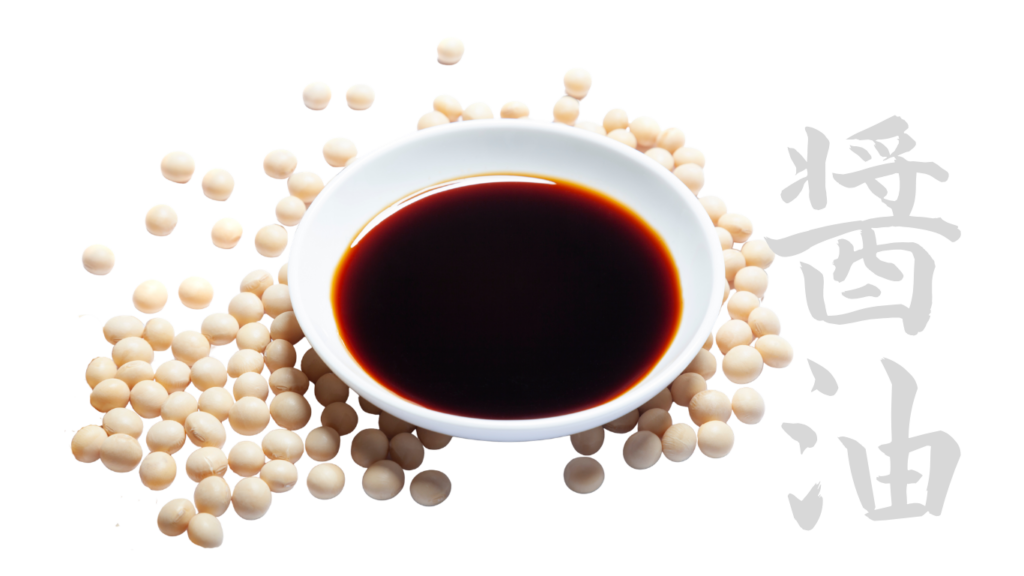
If you are cooking a Japanese recipe and the ingredient list simply calls for “soy sauce,” it is almost always referring to Koikuchi.
This dark, robust brew is the undisputed baseline of Japanese flavor. Despite the dazzling variety of artisanal soy sauces (shoyu) available across Japan today, Koikuchi accounts for roughly 80% of the domestic market. It delivers a masterful, balanced mix of saltiness, subtle caramel sweetness, refreshing acidity, and deep umami.
But why did this specific style become the national standard? The answer lies in a fascinating journey from the wooden barrels of a 13th-century Zen temple to the gritty, bustling streets of historical Tokyo.
The Monk and the “Liquid Gold”
The origins of Japanese soy sauce trace back to a happy accident. In 1254, a Zen Buddhist monk named Shinchi Kakushin returned to Japan from his studies in China. He settled in the town of Yuasa (in Wakayama prefecture) and began teaching locals how to make Kinzanji miso—a hearty, chunky paste of fermented soybeans and vegetables.
As the Yuasa locals fermented this miso in massive cedar barrels, they noticed a dark, viscous byproduct pooling at the bottom. This was the very first Tamari (a word that literally translates to “accumulate”).
Brewers quickly realized that this savory runoff was incredibly flavorful—perhaps even more valuable than the miso paste itself. This thick, 100% soybean liquid was Japan’s original soy sauce.
The Great Soy Sauce Migration
Word of this savory “liquid gold” spread quickly along merchant and pilgrimage routes. But as the brewing techniques traveled across Japan, they evolved. Brewers began adapting the recipe to fit their local climates and cuisines.
In the Chubu region (around Nagoya), they kept the traditional 100% soybean method, creating the thick, intense Tamari still loved there today. In the refined Kansai region (Kyoto and Osaka), chefs wanted a lighter sauce that wouldn’t stain their pristine seasonal vegetables and delicate white fish, leading to the invention of pale Usukuchi.
But the biggest transformation was yet to come.
The Shift to Edo: Fast Food for a Boomtown
In the 17th century, Japan’s political center of gravity moved sharply east to Edo (modern-day Tokyo). Edo was a gritty, energetic boomtown filled with hundreds of thousands of merchants, craftsmen, and laborers working grueling hours to build the new capital.
These sweating laborers burned massive amounts of energy. The delicate, refined flavors of Kyoto simply didn’t hit the spot; they craved strong, salty flavors to replenish their bodies. Furthermore, Edo sat on Tokyo Bay, providing an abundance of rich, oily fish like bonito, mackerel, and tuna. The city needed a bolder condiment that could stand up to these intense flavors.
It wasn’t just the laborers’ appetites that demanded a bolder flavor; it was also the water itself. Tokyo has harder water than Kansai, filtered through volcanic soil. This harder water actually prevents kelp (kombu) from releasing its umami, meaning early Tokyo cooks had to rely on pungent, smoky bonito flakes (katsuobushi) to make their broths. This robust, fish-heavy broth required a much stronger, darker soy sauce to balance it out. Furthermore, Tokyo’s mineral-rich water ramped up yeast activity in the brewing barrels, creating the sharp, highly complex aroma that would define the new standard.
The Birth of Koikuchi and the “Edo Fast-Food Trinity”
To meet the immense demand, entrepreneurs in nearby towns like Noda and Choshi began mass-producing soy sauce. They had a massive geographical advantage: the Tone River (the second largest river in Japan). This powerful waterway acted as a liquid highway, allowing brewers to load heavy wooden barrels of finished soy sauce onto boats and ship them directly into the heart of Edo quickly and cheaply. But to satisfy the city’s palate, they made one revolutionary change to the ancient monk’s recipe: they added roasted wheat.
By using a 50/50 mash of soybeans and roasted wheat, they completely transformed the character of the sauce, creating Koikuchi (“dark mouth”):
- Deeper Color: The sugars in the wheat reacted with the soy during fermentation, creating a beautiful, translucent ruby-brown hue.
- Sharper Aroma: The roasted wheat contributed a highly complex, slightly toasty, and appetite-stimulating aroma.
- Robust Flavor: The wheat introduced a subtle sweetness and a mild acidity that perfectly balanced the heavy salt and intense umami of the soybeans.
This darker, sharper brew was exactly what Edo had been waiting for. It cut through the fat of local tuna and neutralized any fishy odors.
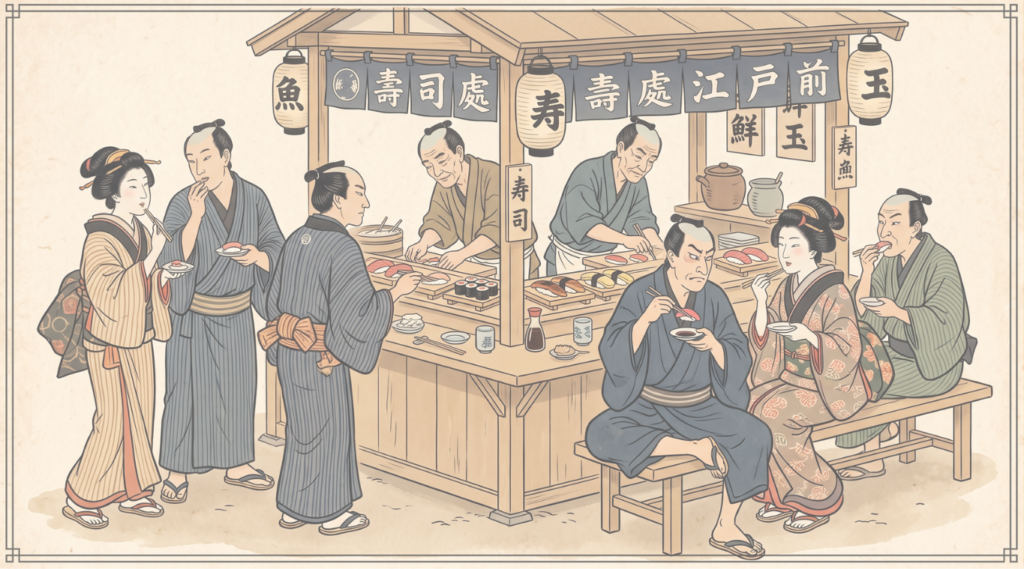
In fact, Koikuchi was the secret ingredient that built Japan’s original fast-food culture. Edo’s busy laborers didn’t have time for sit-down meals; they needed quick, cheap, and calorie-dense food from street stalls (yatai). Koikuchi became the backbone of the famous “Edo Fast-Food Trinity”:
- Edomae Sushi: Early street-food chefs used this robust soy sauce to marinate and cure fish, essentially using the high sodium content as a fast-food preservative.
- Soba (Buckwheat Noodles): The rich, dark dipping broth (tsuyu) that boldly coated the quick-boiling noodles relied entirely on Koikuchi’s sharp umami.
- Tempura and Unagi (Eel): The thick, sweet-and-savory glazes and dipping sauces (tare) were built on a Koikuchi base, providing an acidic bite that cut through heavy frying oil and rich fat.
How Tokyo’s Taste Conquered Japan
So, how did Edo’s local sauce become the national standard?
As Edo grew into modern Tokyo, it became the undeniable cultural, economic, and military heart of Japan. By the late 19th century, railways connected the country, and mass media began spreading Tokyo’s trends. The massive, efficient breweries of Noda and Choshi (the ancestors of modern mega-brands like Kikkoman) could ship their Koikuchi nationwide via trains and steamships.
Slowly but surely, what the capital ate, the rest of the nation followed. Today, Koikuchi is the indispensable, everyday workhorse of the modern Japanese kitchen.