日本旅行で出会った「あの料理」、自分で作ってみる?
Written by Masa
After I left Japan, Japanese food was a treat for a long time.
That was more than 30 years ago. Back then, there weren’t many Japanese ingredients or seasonings available where I lived. Japanese grocery shops eventually started to appear, but the prices weren’t exactly friendly enough for everyday cooking—at least not for me.
Japanese-made soy sauce was one thing I continued to buy. For many other things, I learned to find alternatives or improvise.
It was impossible to buy Kewpie mayonnaise, so I used Kraft or MasterFoods instead. For tomato ketchup, I used Heinz instead of Kagome, a major Japanese ketchup brand. For tonkatsu sauce, which is thicker and sweeter than Worcestershire sauce, I mixed Worcestershire sauce with tomato ketchup to make my own version.
I also bought Chinese-, Taiwanese- and Korean-made products that were similar to Japanese ones. Sometimes they worked perfectly well. Sometimes… not quite.
And quite a few times, I asked my mother in Japan to send me things in the post.
Looking back, I realize that I spent a lot of time finding substitutes and working out how to make Japanese food with whatever was available. Sometimes it was frustrating, other times it was fun.
How Easy Is It To Find Japanese Ingredients Now?
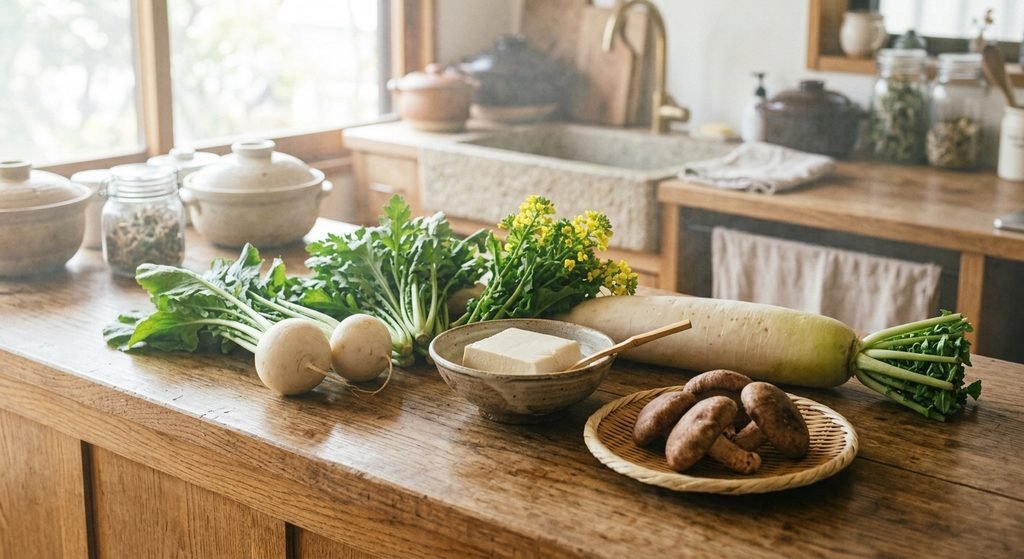
Thankfully, things are very different these days. Japanese ingredients are much easier to find in the city where I live.
Asian grocery stores stock a good range of seasonings, tofu and vegetables, such as daikon, nira (garlic chives), shungiku, napa cabbage and nanohana. Some shops even carry Japanese-style turnips.
Supermarkets these days usually have an “international” section, and even Kewpie mayonnaise is easy to find. In fact, Kewpie has become a bit of a trend here. Japanese curry roux, soy sauce and miso are almost always there, and you can often find frozen satoimo, edamame, lotus root and okra in the freezer section. Fantastic!
It means that making Japanese food is no longer quite the challenge it used to be.
The Food Was So Good There! (And Yes, You Can Recreate It)
I sometimes hear people who have come back from Japan say things like:
“That was so delicious.”
“You can’t get anything like that here.”
“But I really want to eat it again.”
Guess what? I completely understand.
For some things, the best solution may be simply to bring it back home with you, if it’s legal to do so. If you love unagi, buying good-quality, frozen, vacuum-packed unagi in Japan is probably a much better idea than trying to prepare it from scratch at home… lol.
But there are also many Japanese dishes that you can make yourself.
So, What Did You Eat in Japan
That You Really Want to Eat Again?
Karaage. Yakitori. Tonkatsu. Tempura. Sushi. Shogayaki. Japanese potato salad. Okonomiyaki. Yakisoba. Gyudon. Nanohana karashi-ae. Nabe. Sukiyaki…
You don’t need advanced cooking skills to enjoy making many of these dishes. And you don’t always need every ingredient listed in a Japanese recipe, either.
The Hardest Part is Often Starting
If you are not used to Japanese cooking, the first step can feel like a big one.
There may be unfamiliar ingredients. You may not have the right equipment. And you may look at a Japanese recipe and think, “Where am I supposed to find all of that?”
My advice? Start with something you really want to eat. That strong desire to eat it often becomes the biggest motivation. You don’t have to make it perfectly. Just give it a try.
Take Okonomiyaki, For Example
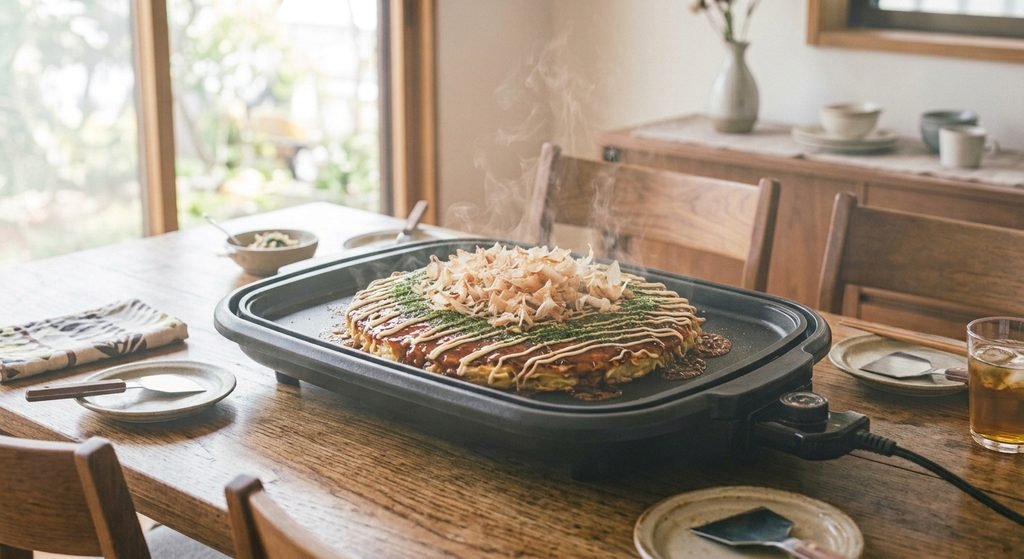
My non-Japanese husband loves it. I mean, he loves it when I cook it!
Of course, having okonomiyaki cooked by a professional right in front of you at a specialist restaurant is a great experience. But making it yourself is a different kind of fun.
The first few times, your okonomiyaki may not look quite like the one you had at the restaurant. Don’t worry—you won’t get a stomach ache as long as it’s cooked through. Even a strangely shaped okonomiyaki may taste pretty good. It just takes a little practice to get the hang of it.
Mix the ingredients, spread the mixture on the hot plate, place the meat on top and let it cook, then flip the whole okonomiyaki over. Then comes the fun part.
First the sauce, then mayonnaise. You can pretend that you are a pro. Then aonori, and finally, katsuobushi (dried bonito flakes).
As soon as the bonito flakes hit the hot okonomiyaki, they start dancing on top.
There is something very satisfying about watching the dish come together, one layer at a time. A bit like LEGO, perhaps? Maybe not?
Hot Plate Culture in Japan
And if you have a hot plate, there is another way to have fun with okonomiyaki. (This is just an additional option, not at all essential for enjoying your okonomiyaki at home!)
Put it in the middle of the table, gather your family or friends around it, and cook together. Everyone can watch, help, chat, eat, and have another go.
At that point, dinner becomes part of the entertainment. This is a very familiar scene in Japanese homes.
But Can I Make It With What‘s Available Here?
The answer is yes, most of the time.
After living outside Japan for many years, I have had plenty of practice working with what is available.
Sometimes you have to substitute one ingredient for another. Sometimes you have to leave something out. Sometimes you find an unexpectedly good alternative. And sometimes you simply have to accept that your version will be slightly different from the one you ate in Japan. And that’s OK.
The important thing is that you can still make something delicious.
And once you’ve made it yourself, you may find that Japanese cooking isn’t quite as difficult as you thought. Then you might start experimenting.
That spirit of “Let’s see what I can do with what I have” is a mindset that still serves me well today.
So, what Japanese dish did you eat in Japan that you’d love to make at home?
Why not start there?