日本の台所はどう変わったのか?
Written by Masa
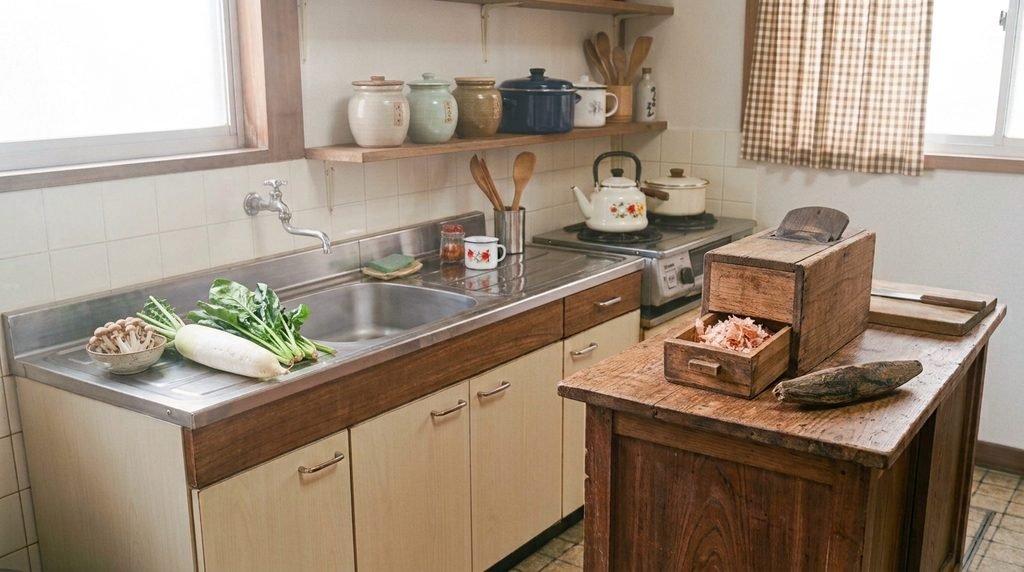
When I was in primary school, my mother sometimes asked me to shave katsuobushi.
If you have never seen it, katsuobushi is dried, fermented bonito. It becomes a very hard block, almost like a piece of wood, and you shave it into thin flakes using a special shaver set into a wooden box.
My job was simple: shave enough katsuobushi to make dashi (fish stock) for that evening’s miso soup.
At the time, I didn’t think there was anything unusual about it. Katsuo-dashi was our family standard.
Then came packaged shaved bonito flakes.
I still remember how happy my mother was at the time. No more sitting at the kitchen counter shaving katsuobushi. Just open the packet and you’re ready to make dashi.
Then came instant dashi granules, followed by instant, and then freeze-dried miso soup. It gets easier and easier!
And now we have dashi packs. Put one in a pot of water, simmer it for a few minutes, and you have real dashi with no hassle.
Of course, a bowl of miso soup made with properly prepared dashi still tastes wonderful. But everyday cooking is not only about what tastes best. It is also about how much time and effort you can afford.
And this is one of the things that has changed in the Japanese kitchen.
From “Proper Cooking” to “Practical Cooking”
Many things used to be simply considered part of cooking.
Making dashi, roasting sesame seeds before using them, cooking rice, making pickles, preparing vegetables, making lunch boxes, and so on. Some things took time, and there wasn’t really another option.
I was reminded of this when I was talking with a younger friend.
She was looking at some sesame seeds and asked me,
“Why are the sesame seeds here so flat?”
I looked at her and said, “Because they’re raw, aren’t they?”
She looked puzzled.
“What do you mean?”
“We roast sesame seeds before using them.”
She was surprised.
“Really?”
She had never thought the sesame seeds she was buying from the supermarket were already roasted. (By the way, you can also buy ground roasted sesame seeds.)
It was a small conversation, but it made me realise something. Even within Japan, the common knowledge of these things changes and passes naturally from one generation to another.
And Then There Is the Gyoza Question
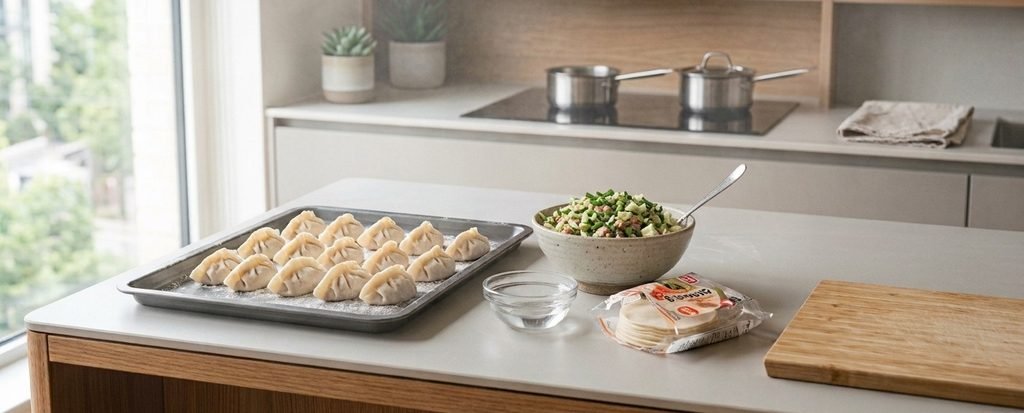
There is a classic conversation that many Japanese wives will recognise.
The wife asks: “What would you like for dinner?”
The husband answers: “Gyoza would do.”
“What do you mean, ‘would do’?”
“Gyoza is easy, isn’t it?”
This is the point where the wife is reminded, once again, of how little her husband understands about the amount of effort that goes into making a meal.
Making gyoza from scratch is not difficult, but it is not exactly something you casually throw together in five minutes.
You need to prepare the filling, chop the vegetables, season the meat, wrap the gyoza, and then cook them. And if you’re making enough for a family, there can be quite a lot of wrapping involved.
But today, there is another answer: frozen gyoza. And there are some very good ones too.
You can buy them at supermarkets, and there are also frozen gyoza from popular restaurants and specialist makers that can be ordered and delivered.
So perhaps the modern Japanese wife doesn’t have to argue with her husband about whether gyoza are “easy.” She can simply put a tray of frozen gyoza in the pan.
Problem solved.
The Modern Japanese Kitchen Is Not One Thing
This is what I find interesting about the Japanese kitchen today.
There are young (and older) people who hardly cook at all. Some may have just a kitchenette, with almost no kitchen equipment beyond a microwave and a kettle.
There are busy families who rely on frozen food and supermarket pre-cooked dishes during the week, but spend more time making meals on weekends.
There are people who are perfectly happy with retort curry (in fact, there are many great ones!).
And there are also people who still make everything from scratch. They make their own dashi. They cook rice in rice cookers or pots. They prepare seasonal vegetables. They may even make miso, pickles, or other foods at home.
And, of course, many people move between all of these styles depending on the day.
Today, there are plenty of shortcuts. And taking shortcuts doesn’t mean Japanese home cooks have stopped caring about food. People still care about good food. They just have more choices for different lifestyles.
Japanese food is always evolving. The kitchen changes when new ingredients become available. It changes when more convenient appliances become available. It changes when people have less time. It changes when younger generations develop different habits.
My mother’s excitement over a packet of shaved bonito flakes may seem rather amusing now. But it was the beginning of something that has continued ever since: finding ways to make everyday cooking a little easier.
At the same time, some things remain. A good bowl of miso soup made with good dashi still hits the spot at the end of the day.
The tools and shortcuts have changed. The desire for a good meal hasn’t.