日本人とごはん、リアルな相関図
Written by Masa
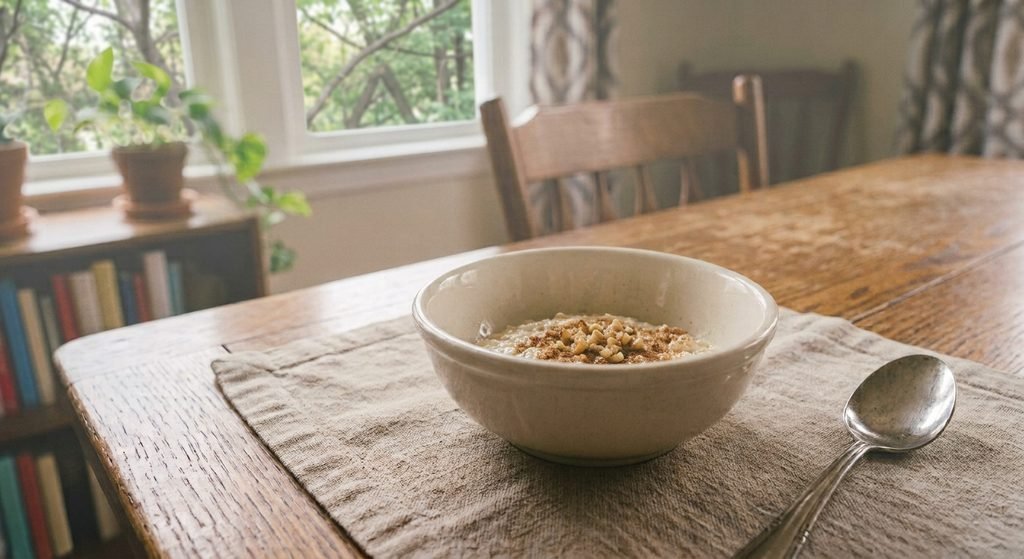
One of the biggest food surprises I had during my first homestay abroad was rice pudding.
Rice. With milk. And sugar. What? Dessert?
I knew, of course, that rice was eaten differently around the world. But seeing something I had always thought of as the centre of a proper meal turned into a sweet pudding was still quite a shock.
And sorry, I didn’t like it.
I suppose that was fair, though. The three-year-old son of my host family spat out the ohagi I made for them—a ball of lightly mashed glutinous rice covered in sweet red bean paste.
We were even!
It was equally surprising to see rice served as just one small side on a plate, alongside meat and vegetables (though I do this myself now!). In Japan, rice has traditionally had a very different position at the table. It isn’t simply one item among many. It is the gohan.
And that word says quite a lot.
In Japanese, gohan means cooked rice, but it also means “meal.” Breakfast is asa-gohan, lunch is hiru-gohan, and dinner is ban-gohan.
Of course, Japanese people don’t eat white rice at every meal today. Breakfast might be an egg on toast (and coffee, of course!), and lunch could easily be ramen, pasta, or a hamburger.
But rice still occupies a rather special place in Japanese food culture.
A Brief History: How Rice Shaped Japan
Rice cultivation began spreading through Japan around 3,000 years ago and became firmly established during the Yayoi period (around BCE 800-500).
Wet-rice farming required irrigation, water management, and plenty of shared work. Over time, rice became closely connected with village life, seasonal rituals, taxes, and wealth.
During the feudal period, rice even became a measure of economic value: the wealth of a domain was expressed in koku, a unit based on rice production.
Yet this doesn’t mean everyone in Japan was happily eating bowls of polished white rice every day. For many ordinary people, white rice was a luxury. Barley, millet, and other grains were often mixed with rice or eaten instead.
Perhaps that history helps explain why even one grain of rice can still feel strangely precious.
Why Do Japanese People Pick Up the Rice Bowl?
When I was growing up in Japan, picking up my rice bowl while eating was completely normal. I never thought much about it.
So I was quite surprised when I later learned that in traditional Korean table manners, the rice bowl normally stays on the table.
“Really? You don’t pick it up?”
That was one of those small moments when I suddenly realized that something I had always considered completely ordinary was actually a Japanese eating custom.
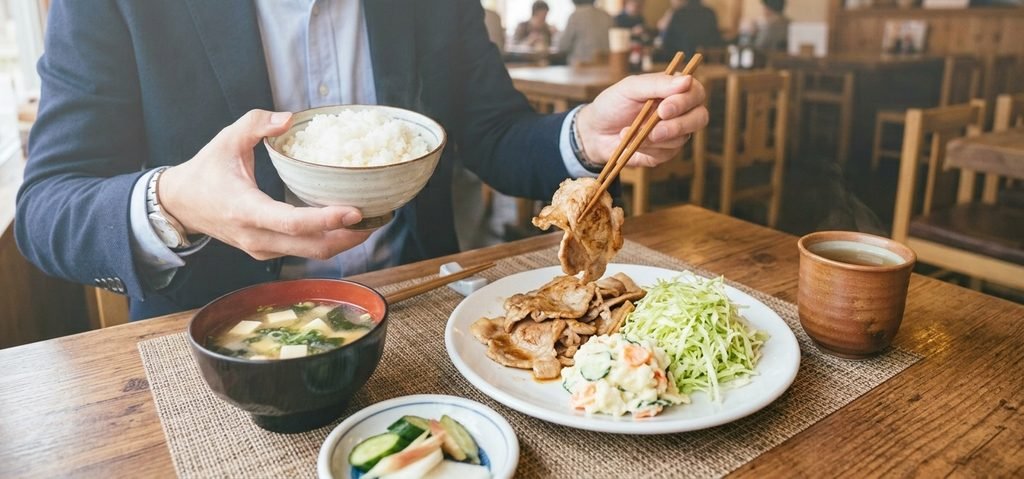
In Japan, small rice bowls and soup bowls are normally held in one hand while eating.
There is also a practical reason for it. Japanese short-grain rice sticks together well enough to pick up with chopsticks, but holding the bowl closer to you makes the whole operation much easier—and reduces the chance of dropping rice halfway across the table.
It is such an everyday habit that most Japanese people probably don’t think about it at all.
Until, perhaps, someone tells them that people elsewhere do it differently.
Why Is Japanese Rice Served Plain?
Another thing that can seem unusual is that Japanese rice is usually served completely plain.
No salt. No butter. No oil.
Just rice.
That might sound rather boring until you look at how it is actually eaten.
In a traditional Japanese meal, the rice sits in its own bowl while the okazu—the side dishes—are served separately. You might have grilled fish, pickles, vegetables, tofu, or something simmered in soy sauce and dashi.
You take a bite of something savory, then a bite of plain rice (or vice versa).
The flavors meet in your mouth.
This is sometimes described as kounai choumi, or “seasoning in the mouth.” Instead of mixing everything together beforehand, you control the balance as you eat.
For me, it makes more sense to think of it the other way around. Rice isn’t plain because the side dishes needed balancing. Many of the side dishes we grew up eating were seasoned with rice in mind—because Japanese people LOVE plain white rice!
A salty bite of grilled salmon tastes different when followed by rice. Pickles become less sharp. A strongly seasoned simmered dish feels more balanced.
You may also hear about sankaku tabe, or “triangle eating,” where you move between rice, side dishes, and soup rather than finishing one item completely before moving on to the next. Not that you have to follow this “triangle” at every meal!
Kounai choumi is about combining flavors in your mouth, while sankaku tabe describes the rhythm of moving between different parts of the meal.
For many Japanese people, neither is a technique. It is simply how we learned to eat.
Leaving No Grain Behind
When I was a child, I was taught not to leave grains of rice in my bowl.
Nobody had to make a dramatic speech about it. You simply learned that rice wasn’t something you wasted.
I even grew up hearing warnings that something bad would happen if you left rice in your bowl. Rather severe, perhaps! But the point behind sayings like this was clear: every grain mattered.
Rice took months to grow. It depended on soil, water, weather, and a great deal of human work.
Even now, if a few grains of rice are left stuck to the side of my bowl, I pick them up with my chopsticks and eat them.
In fact, if my husband leaves rice in his bowl, I often eat that too. It’s not that I’m worried he’ll go blind—I just can’t help thinking, “You shouldn’t waste rice!”
I suppose some childhood lessons are difficult to shake.
That small instinct probably says more about what rice means in Japan than any grand explanation could. Rice still carries a surprising amount of meaning for such a small grain.
We hold the bowl a certain way. We eat plain rice with seasoned dishes. We pick up the last few grains. We even use the same word for “rice” and “meal.”
And after all these years, rice pudding still feels just a little strange to me.
Next Story: How to Cook Japanese Rice with What You Have