「いただきます」と「ごちそうさま」- 日本の食卓
Written by Masa
If you have ever eaten a meal in Japan, you may have heard two little phrases before and after the food: “Itadakimasu” and “Gochisosama deshita.”
They are often translated as “Let’s eat” and “Thank you for the meal,” but the true meaning goes much deeper. They are about appreciation — for the ingredients, the lives given, and every single person who helped bring that food to your table.
The Meaning Behind “Itadakimasu” and “Gochisosama”
Before eating, itadakimasu expresses gratitude for receiving life and food. After finishing, gochisosama acknowledges the effort behind the meal.
The word chisou (馳走) originally meant “to run around.” Centered around food, it describes the effort of gathering ingredients, preparing, cooking, and serving. So gochisosama deshita isn’t just “that was delicious.” It means: “Thank you for all the running around and effort you put into this meal.”
And this brings me to one Japanese cookbook author who had a big impact on me after I left Japan: Harumi Kurihara.
The Two Books That Came With Me
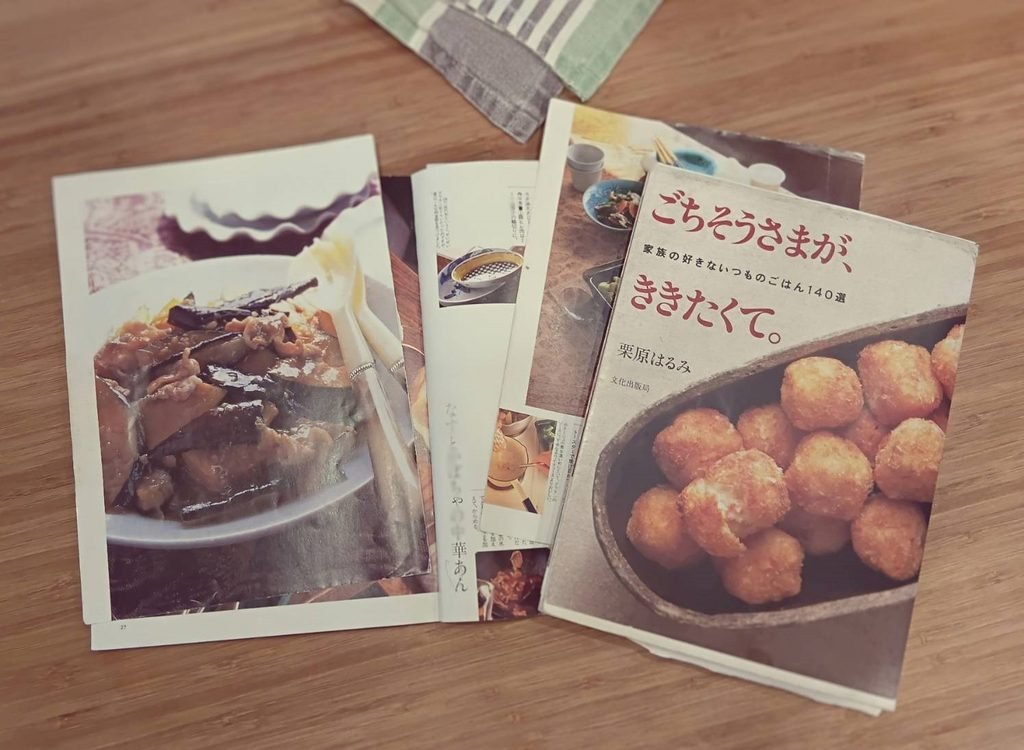
When I moved abroad over 30 years ago, I was worried about whether I could recreate the Japanese comfort food I grew up with using limited local ingredients. In a Tokyo bookstore, I picked up two books by Harumi Kurihara: Gochisosama ga Kikitakute (“Because I Want to Hear You Say Gochisosama”) and its sequel.
I always loved that title.
She chose the word Gochisosama.
To me, that says a lot about the kind of cooking she wanted to share. She wasn’t teaching people how to cook fancy restaurant food to impress guests. She was showing us how to feed the people we love every day, so that at the end of the night, someone relaxes, smiles, and says, “Gochisosama.”
These battered books have been my kitchen talismans.
The Dish I Cooked When I Wanted to Feel at Home
Funnily enough, the very first dishes I made from these books weren’t even Japanese—it was Ratatouille or maybe Chili Con Carne. But whenever I craved a true taste of home, there was one specific set menu I always turned to: Ginger Pork, Japanese-style potato salad, green pea rice, and a bowl of miso soup.
Whenever I needed to feel at home, this meal always hit the spot—nourishing both my body and my soul. That might sound like a slight exaggeration, but it really isn’t.
Making Ginger Pork brought instant comfort. As the pork sizzled in the pan and the soy sauce, sake, and grated ginger caramelized into that savory-sweet aroma, the kitchen instantly felt warm and familiar again. To tell the truth, I couldn’t get thinly sliced pork back then, so my ginger pork looked more like thick steaks. Sake was also expensive, so I substituted a cheap, dry white wine-and it worked surprisingly well!
Paired with shredded cabbage and creamy, gentle Japanese-style potato salad, it was just an ordinary dinner from home, which was exactly what I wanted. Sharing this meal with my partner created a moment of simple warmth. It was around that time that saying Itadakimasu and Gochisosama together became a daily routine in our household.
Bridging Two Worlds
Years later, I came across the English edition of Harumi Kurihara’s work, Harumi’s Japanese Kitchen.
I remember flipping through the pages and suddenly recognizing dishes I had been making for years. There were the familiar marinades, the simple side dishes, and the kind of everyday meals I had cooked many times.
Seeing them again, this time in English, was a funny feeling. These were recipes I had known for decades, but now I could read them in the language of the country I was living in. It felt like I was seeing an old part of my life in a new setting.
So We Say “Itadakimasu” and “Gochisosama”
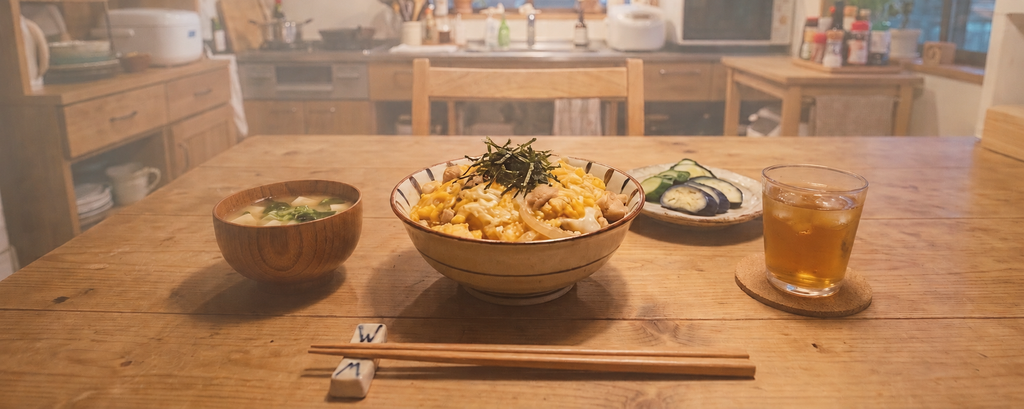
Harumi Kurihara’s books showed me that everyday cooking doesn’t have to be about impressing people with fancy techniques. It’s about preparing everyday food with care for the people you love.
Sometimes it is a proper meal. Sometimes it is something quick at the end of a long day. And sometimes, it is simply a bowl of rice, some leftovers, and miso soup.
It doesn’t have to be perfect. Sometimes, it just has to make you feel at home.
And this is where itadakimasu and gochisosama—so deeply woven into Japanese daily life—come into the picture. They simply remind us to pause and appreciate whatever is on the table.
Want to Find a Japanese Cookbook to Inspire Your Cooking
—or to Give Someone a Taste of Japan?